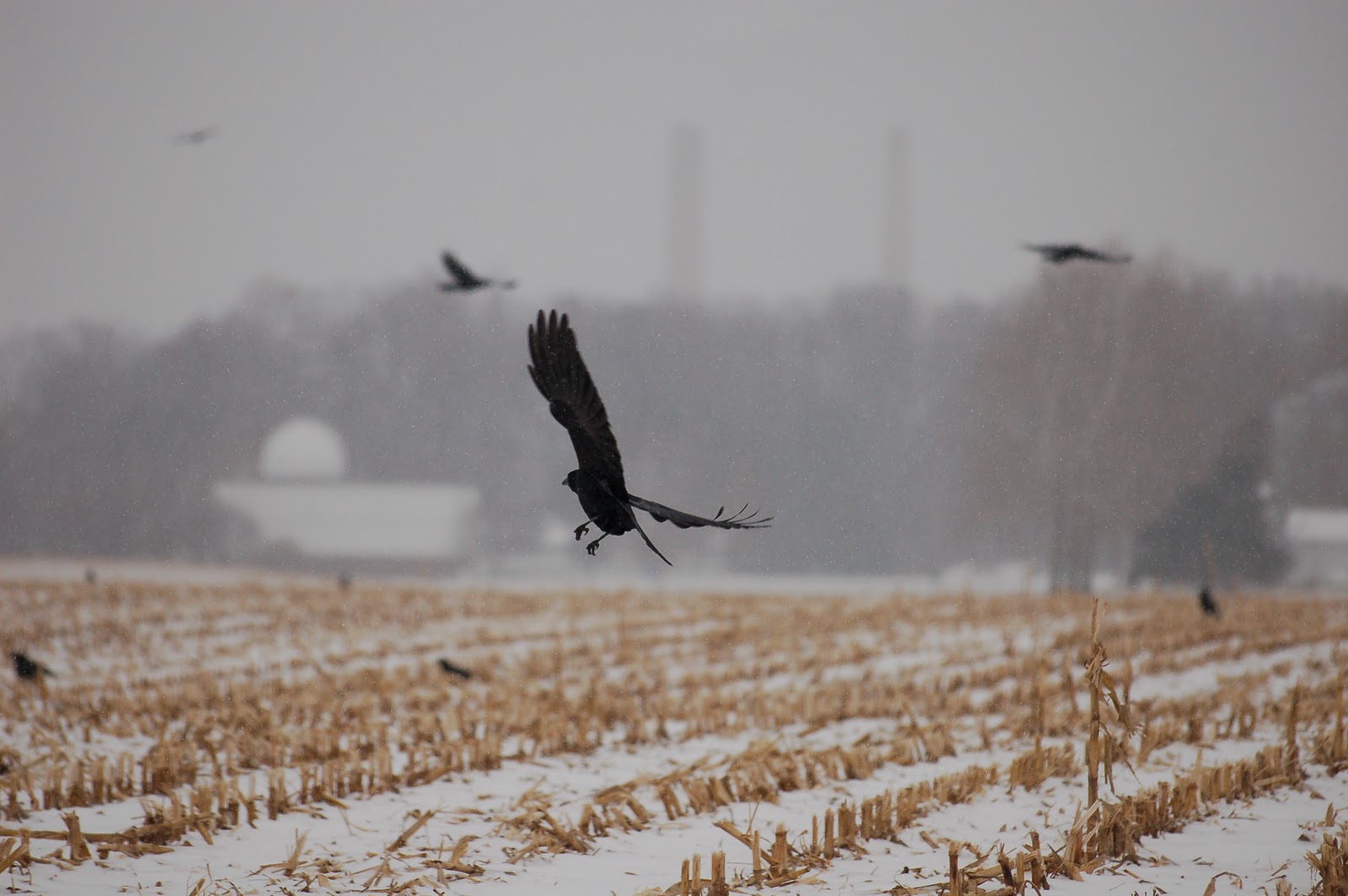
Friday, December 31, 2010

End of Year Reflections

I always enjoy settling down on the last day of the year to recollect and reflect on the experiences of the last year. This last year has been a huge birding year for me (not a "big year" but nevertheless big!) and it is a particular pleasure to recall the highs and lows during the last rotation round the sun. 


As far back as I can remember I have been passionate about the natural world, almost to the exclusion of anything else at times. As a young child I would reread my grandparents "book of british birds" every time I visited them. I read and dreamed about the wildlife out there for me to see, and I grew up exploring the natural history of the gorgeous Forest of Dean. In spite of this early grounding in observing natural history, followed by a degree in Zoology and Biochemistry, and a PhD in Computation Biology, to my horror last year I discovered I was at best an OK naturalist. I'd become lazy, complacent, and over the years I had not continued to develop my skills. It's natural enough, life happens and distractions can easily cause you to lose your focus, but as a result I was missing out on some of things I value most in life. Things needed to change, and change they did! A number of key things came together to make this year such a stellar one with regard to my development as a naturalist, and observer of avifauna in particular:

  1. I was in a country where for the first time in my life I wasn't intimately familiar with the vast majority of the birds and wildlife surrounding me. This was enough to kick me out of my complacency and decide I needed to make the effort to get out, observe and learn about my new surroundings. 
  2. I had the good fortune to meet Bruce Cohen, who became both a good friend and a spectacular mentor at a local Audubon meeting. Finding someone who is as OCD as me when they get excited about a project is rare, finding someone who also happens to be extremely expert on North American birds ... Priceless. If you are a frustrated birder wanting to improve your skills I can't recommend spending time with more experienced birders enough. In terms of the speed with which your competence will develop, I would liken it to being fired out of a cannon.
  3. I started listing. For those not in the know, this is essentially a kind of game birders often play for shits and giggles. You simply keep track of the birds you've seen. Most listers will keep a list of birds they've seen in their life, many will also keep track of their totals for the year, for their yard, for their favourite patch, for certain countries, states or counties. Some people get more competitive and spice it up with (for the most part) friendly rivalries. The key thing, for me, is that it focuses your birdwatching, if I wanted to increase my lists I had to think about when and where I would see birds, in short I had to get to know them better. It also provided encouragement to take some mini-adventures and chase some sightings of rarer birds.
These three elements really came together in the fall of last year. By the time New Year's Eve came around I was firmly back in the grip of on old passion and eager to hit the new year birding. By this time I had a good idea of what my first goals needed to be:
  1. I wanted to see as many of the native birds found in Michigan as possible. Actually, I wanted to know them intimately, but that takes time, and simply observing them seemed like the obvious first step. 
  2. In order to do this I'd need to:
    1. Recognise the birds visually
    2. Learn their songs and calls
    3. Become familiar with their behaviour and migratory patterns
  3. I specifically wanted to find and observe owls; a bird that had always fascinated me but for the most part had always eluded me in the past. There are at least 10 species of owl that are frequently seen in Michigan, at least at some point during the year, some of which are relatively common, even if not commonly spotted. 
  4. Also, somewhat arbitrarily, I decided I wanted to try and see a new bird species for every day of the year. 365 species for a year list, is not an unreasonable goal for a year, and it would give me some impetus to explore outside of Michigan from time to time.

When I started the year my life list was a measly 113. It excluded many birds I had seen previously, my rule was that if I didn't have photographic evidence of old sightings. That way I didn't have to worry about inaccuracies in my memory, or my ID skills in the past. I got my first life bird of the year on the 1st Jan, a Carolina wren, closely followed later in the day with my first horned lark.


Carolina Wren

Horned Larks


The year got off to a flying start, and looking back it is hard to believe all of the incredible experiences that have resulted can all have taken place in the last year. January 2nd, I made the excellent decision to travel to Douglas Beach, on Lake Michigan, to participate in the Allegan County Christmas Bird Count. It was a great way to renew acquaintances with some fantastic birders such as Rick Brigham and Mike Overway, as well as a gorgeous day of birding in thick falling Lake-effect snow. I decided to finally cave and buy a car in January, something I had resisted for the first 2 years of living in Michigan; it was the best decision I could have made. My Jeep Grand Cherokee and I were a match made in heaven, and weekend birding roadtrips were ON.


Strokey the Cherokee
The very first weekend after I bought my new wheels I walked out of work on the Friday, jumped in my car and headed north to look for Snowy Owls. Over the course of the year I saw many birds that I had desperately wanted to see all my life, in particular I finally saw: Golden Eagle, Snowy Owl, Osprey, Common Loon, Horned and Eared Grebe, all birds I had read about from childhood but never before seen.


Osprey

Snowy Owl
I had great success with owls over the course of the year. January gave me a boost of encouragement with my first Northern Hawk Owl and Snowy Owl.


Northern Hawk Owl
A roadtrip to Minnesota in Feb, to look for Great Gray Owls with the infamous @birdchick in the Sax-zim bog, was heaps of fun even though we dipped on the Great Grey Owl. Still a day which includes Boreal Chickadees, Bohemian Waxwings, Northern Hawk Owls, Grey Jays, Ruffed Grouse, Black-backed Woodpeckers and even my first Porcupine sighting is never a bad day. Hell, I might even write up a blog post and share some pics some time, it's not even been a year yet!


As the year rolled on, with a little patience and persistence, I was able to find and locate the more common, but inconveniently nocturnal, Barred Owl, and Great Horned Owl, in my local birding haunts.


Great Horned Owl
Great Horned Owl (chick)
After that I had to work a little harder to find the remaining owls I was looking for. Autumn provided my first views of Short-eared owls flying low of fields at dusk (thanks to the Northern Harrier that buzzed one hiding in the grass). Later, in November, I took my girlfriend to look for a Saw-whet owl that had been spotted down near Ann Arbor. Needless to say, having no experience birding whatsoever, she not only spotted the Saw-whet owl first, but also managed to find an unexpected Great Horned Owl! So much for my birding skills. 


Saw-Whet Owl
Six owl species during the year was fantastic, but one bird was vexing me. The Eastern Screech Owl is easily the most common owl in Michigan, there is probably one in every patch of wood I've walked through this year. Yet, in spite of hearing it call many times, I was never able to set eyes on one, no matter how hard I tried. As December neared to a close this situation was too ridiculous to continue and inspired by stumbling upon a Barred Owl earlier in the day, I headed out at dusk to look for one. Success was swift, and sweet, this tiny little owl responded quickly to my calls and flew to a nearby tree close enough for me to observe him closely. Perfect!


In May, I was invited by Mike Overway, to join him, his brother Jer Overway and Steve Hamberg, for the Berrien County Birdathon. This is a 24hr birding competition where teams compete to see as many species of bird as possible, within the county boundaries. It was a real privilege to join these talented birders, especially given my relative inexperience. Mike and Jer being tall, Steve being a Dr and myself being a Brit, our team was called "Two Stilts, a quack and a GNDI". We ended up recording 154 species during the course of a day, finishing a respectable 3rd place overall, and 2nd place for out-of-county teams. While scouting out for the big day and during the event itself, I saw an incredible 36 birds I'd never before seen (known as life-birds), highlighting both my inexperience, the generosity of my team members in sharing their experience and the rich diversity of birds found in Berrien County. All in all, an incredible experience I would do again in a heartbeat. 


As I become more connected with the local birding community I started to realised just how many rare birds and vagrants are spotted every year. Over the course of the year I was able to chase a few of these rarities, and I had a lot of fun doing so. Driving 6 or 7 hours at the arse-crack of dawn to freeze at the end of a Great Lake scanning the horizon for a rare vagrant, or sitting for hours on end in a humid swamp while mosquitos eat you alive, is not everybody's cup of tea, but the thrill of the chase, the challenge really appealed to me. I saw some fantastic wild areas and met some incredible birders along the way, not to mention the birds themselves. Some of the birds I chased I've already mentioned: Northern Hawk Owl, Snowy Owl, Saw-Whet Owl, Short-Eared Owl. Some birds I didn't find: a one-legged Piping Plover and an Ash-throated flycatcher. Some birds were spectacular, and the  Purple Gallinule and Yellow-headed Blackbird spring to mind.


Purple Gallinule
Others fun trips included a Long-billed Dowitcher, Common-ground Dove and most incredibly an Anna's Hummingbird, in the Northern UP, after a blizzard!


Anna's Hummingbird (Nov - Grand Marais, MI)
My efforts during the year yielded many side benefits. I've seen some cold, barren and stunningly beautiful landscapes.


Whitefish Point, MI, Feb 2010
Parasitic Jaeger, Whitefish point, MI, Sep 2010
Mackinaw Straits, MI, Feb 2010
Rudyard Flats, MI, Feb 2010
I've seen Majestic birds.
Bald Eagle


Impressive birds.
Sandhill Cranes
Big, fat noisy birds. 
Wild Turkey


Beautiful birds.
Baltimore Oriole
Cedar Waxwing
In short, it's been incredible, and I can't wait to start a new year a fresh. This year I get to refine my skills and start to "really" get to know the wildlife surrounding me, and that is exciting. Will I recall the warbler and sparrow songs and calls before the spring migration? Perhaps this year I'll achieve better mastery of the more tricky ID problems: shorebirds, gulls for example. I have a good idea where to go to find many of the birds, but there are still large swathes of Michigan, and the United States, left to explore, I don't anticipate getting bored any time soon.


I saw 304 species of bird seen over the course of the year, of which 213 were life birds. 249 of these birds were found within the ABA area (essentially North America). For those of you who have any interest at all, here is my year list, complete with the date of the first sighting for each bird. Birds coloured red were life birds for me, you can see that once the spring migration hit, almost every bird was a life bird for me. Happy New Year!


1 White-breasted Nuthatch - Sitta carolinensis 01/01/10
2 Dark-eyed Junco - Junco hyemalis 01/01/10
3 Red-bellied Woodpecker - Melanerpes carolinus 01/01/10
4 Downy Woodpecker - Picoides pubescens 01/01/10
5 American Crow - Corvus brachyrhynchos 01/01/10
6 American Goldfinch - Spinus tristis 01/01/10
7 Tufted Titmouse - Baeolophus bicolor 01/01/10
8 Black-capped Chickadee - Poecile atricapillus 01/01/10
9 Carolina Wren - Thryothorus ludovicianus 01/01/10
10 Mourning Dove - Zenaida macroura 01/01/10
11 Northern Cardinal - Cardinalis cardinalis 01/01/10
12 Northern Flicker - Colaptes auratus 01/01/10
13 Horned Lark - Eremophila alpestris 01/01/10
14 Rock Pigeon - Columba livia 01/01/10
15 Red-tailed Hawk - Buteo jamaicensis 01/01/10
16 Cooper's Hawk - Accipiter cooperii 01/01/10
17 House Sparrow - Passer domesticus 01/01/10
18 American Tree Sparrow - Spizella arborea 01/01/10
19 Canada Goose - Branta canadensis 01/01/10
20 European Starling - Sturnus vulgaris 01/01/10
21 Mute Swan - Cygnus olor 01/02/10
22 Mallard - Anas platyrhynchos 01/02/10
23 House Finch - Carpodacus mexicanus 01/02/10
24 Herring Gull - Larus argentatus 01/02/10
25 Hairy Woodpecker - Picoides villosus 01/02/10
26 Gadwall - Anas strepera 01/02/10
27 Bufflehead - Bucephala albeola 01/02/10
28 Blue Jay - Cyanocitta cristata 01/02/10
29 Belted Kingfisher - Megaceryle alcyon 01/02/10
30 Bald Eagle - Haliaeetus leucocephalus 01/02/10
31 American Black Duck - Anas rubripes 01/02/10
32 American Coot - Fulica americana 01/02/10
33 Ring-billed Gull - Larus delawarensis 01/02/10
34 Red-breasted Merganser - Mergus serrator 01/02/10
35 Pied-billed Grebe - Podilymbus podiceps 01/02/10
36 Eastern Bluebird - Sialia sialis 01/03/10
37 Common Goldeneye - Bucephala clangula 01/23/10
38 Common Raven - Corvus corax 01/23/10
39 Wild Turkey - Meleagris gallopavo 01/23/10
40 Common Merganser - Mergus merganser 01/23/10
41 Northern Hawk Owl - Surnia ulula 01/23/10
42 Snow Bunting - Plectrophenax nivalis 01/24/10
43 Rough-legged Hawk - Buteo lagopus 01/24/10
44 Snowy Owl - Bubo scandiacus 01/30/10
45 Golden Eagle - Aquila chrysaetos 01/30/10
46 Pine Grosbeak - Pinicola enucleator 01/31/10
47 Great Horned Owl - Bubo virginianus 02/06/10
48 Northern Mockingbird - Mimus polyglottos 02/06/10
49 Sharp-shinned Hawk - Accipiter striatus 02/07/10
50 American Robin - Turdus migratorius 02/08/10
51 Cedar Waxwing - Bombycilla cedrorum 02/08/10
52 American Kestrel - Falco sparverius 02/08/10
53 Lapland Longspur - Calcarius lapponicus 02/12/10
54 Brown Creeper - Certhia americana 02/20/10
55 Merlin - Falco columbarius 02/27/10
56 Great Black-backed Gull - Larus marinus 02/27/10
57 Fish Crow - Corvus ossifragus 02/27/10
58 Eastern Towhee - Pipilo erythrophthalmus 02/27/10
59 Double-crested Cormorant - Phalacrocorax auritus 02/27/10
60 Common Grackle - Quiscalus quiscula 02/27/10
61 Brown-headed Cowbird - Molothrus ater 02/27/10
62 Black-crowned Night-Heron - Nycticorax nycticorax 02/27/10
63 American Wigeon - Anas americana 02/27/10
64 White-throated Sparrow - Zonotrichia albicollis 02/27/10
65 Yellow-rumped Warbler - Dendroica coronata 02/27/10
66 Swamp Sparrow - Melospiza georgiana 02/27/10
67 Ring-necked Duck - Aythya collaris 02/27/10
68 Red-winged Blackbird - Agelaius phoeniceus 02/27/10
69 Carolina Chickadee - Poecile carolinensis 02/28/10
70 Ruby-crowned Kinglet - Regulus calendula 02/28/10
71 Pileated Woodpecker - Dryocopus pileatus 02/28/10
72 Peregrine Falcon - Falco peregrinus 02/28/10
73 Great Blue Heron - Ardea herodias 02/28/10
74 Sandhill Crane - Grus canadensis 03/06/10
75 Northern Harrier - Circus cyaneus 03/06/10
76 Red-shouldered Hawk - Buteo lineatus 03/06/10
77 Canvasback - Aythya valisineria 03/07/10
78 Redhead - Aythya americana 03/07/10
79 Hooded Merganser - Lophodytes cucullatus 03/07/10
80 Killdeer - Charadrius vociferus 03/07/10
81 Turkey Vulture - Cathartes aura 03/11/10
82 Song Sparrow - Melospiza melodia 03/13/10
83 Greater Scaup - Aythya marila 03/13/10
84 Gray Jay - Perisoreus canadensis 03/14/10
85 Boreal Chickadee - Poecile hudsonicus 03/14/10
86 Black-backed Woodpecker - Picoides arcticus 03/14/10
87 Bohemian Waxwing - Bombycilla garrulus 03/14/10
88 Ruffed Grouse - Bonasa umbellus 03/14/10
89 Red-breasted Nuthatch - Sitta canadensis 03/14/10
90 Pine Siskin - Spinus pinus 03/14/10
91 Northern Shrike - Lanius excubitor 03/21/10
92 Green-winged Teal - Anas crecca 03/21/10
93 Northern Pintail - Anas acuta 03/21/10
94 Tundra Swan - Cygnus columbianus 03/21/10
95 Northern Shoveler - Anas clypeata 03/21/10
96 Eastern Meadowlark - Sturnella magna 03/21/10
97 Lesser Scaup - Aythya affinis 03/21/10
98 Rusty Blackbird - Euphagus carolinus 03/22/10
99 Wood Duck - Aix sponsa 03/22/10
100 Eastern Phoebe - Sayornis phoebe 03/26/10
101 Tree Swallow - Tachycineta bicolor 03/26/10
102 Barred Owl - Strix varia 03/28/10
103 Osprey - Pandion haliaetus 03/31/10
104 Blue-winged Teal - Anas discors 03/31/10
105 Hermit Thrush - Catharus guttatus 04/01/10
106 Wilson's Snipe - Gallinago delicata 04/02/10
107 Lesser Yellowlegs - Tringa flavipes 04/02/10
108 Greater Yellowlegs - Tringa melanoleuca 04/02/10
109 Fox Sparrow - Passerella iliaca 04/04/10
110 Golden-crowned Kinglet - Regulus satrapa 04/04/10
111 Chipping Sparrow - Spizella passerina 04/07/10
112 Winter Wren - Troglodytes troglodytes 04/10/10
113 Common Loon - Gavia immer 04/10/10
114 Horned Grebe - Podiceps auritus 04/10/10
115 Yellow-bellied Sapsucker - Sphyrapicus varius 04/11/10
116 Northern Rough-winged Swallow - Stelgidopteryx serripennis 04/13/10
117 Brown Thrasher - Toxostoma rufum 04/14/10
118 Field Sparrow - Spizella pusilla 04/14/10
119 Savannah Sparrow - Passerculus sandwichensis 04/20/10
120 Barn Swallow - Hirundo rustica 04/21/10
121 Trumpeter Swan - Cygnus buccinator 04/21/10
122 Black Scoter - Melanitta nigra 04/21/10
123 Ruddy Duck - Oxyura jamaicensis 04/21/10
124 Vesper Sparrow - Pooecetes gramineus 04/23/10
125 Brewer's Blackbird - Euphagus cyanocephalus 04/24/10
126 American Woodcock - Scolopax minor 04/26/10
127 Eastern Kingbird - Tyrannus tyrannus 04/27/10
128 Pectoral Sandpiper - Calidris melanotos 04/29/10
129 Dunlin - Calidris alpina 04/29/10
130 Broad-winged Hawk - Buteo platypterus 04/30/10
131 Blue-gray Gnatcatcher - Polioptila caerulea 04/30/10
132 Yellow Warbler - Dendroica petechia 04/30/10
133 Pine Warbler - Dendroica pinus 04/30/10
134 Cliff Swallow - Petrochelidon pyrrhonota 05/01/10
135 Willet - Tringa semipalmata 05/01/10
136 Bank Swallow - Riparia riparia 05/01/10
137 White-crowned Sparrow - Zonotrichia leucophrys 05/01/10
138 Spotted Sandpiper - Actitis macularius 05/01/10
139 Eared Grebe - Podiceps nigricollis 05/01/10
140 Bonaparte's Gull - Chroicocephalus philadelphia 05/01/10
141 House Wren - Troglodytes aedon 05/01/10
142 Greater White-fronted Goose - Anser albifrons 05/01/10
143 Gray Catbird - Dumetella carolinensis 05/01/10
144 Wilson's Phalarope - Phalaropus tricolor 05/01/10
145 Rose-breasted Grosbeak - Pheucticus ludovicianus 05/01/10
146 Chimney Swift - Chaetura pelagica 05/02/10
147 Baltimore Oriole - Icterus galbula 05/02/10
148 Warbling Vireo - Vireo gilvus 05/03/10
149 Ruby-throated Hummingbird - Archilochus colubris 05/03/10
150 Nashville Warbler - Vermivora ruficapilla 05/03/10
151 Black-throated Green Warbler - Dendroica virens 05/03/10
152 Common Yellowthroat - Geothlypis trichas 05/03/10
153 Louisiana Waterthrush - Seiurus motacilla 05/04/10
154 Scarlet Tanager - Piranga olivacea 05/04/10
155 Least Flycatcher - Empidonax minimus 05/05/10
156 Blue-winged Warbler - Vermivora pinus 05/06/10
157 Chestnut-sided Warbler - Dendroica pensylvanica 05/06/10
158 Wood Thrush - Hylocichla mustelina 05/06/10
159 American Redstart - Setophaga ruticilla 05/06/10
160 Purple Martin - Progne subis 05/08/10
161 Bobolink - Dolichonyx oryzivorus 05/08/10
162 Green Heron - Butorides virescens 05/08/10
163 Solitary Sandpiper - Tringa solitaria 05/08/10
164 Palm Warbler - Dendroica palmarum 05/08/10
165 Orchard Oriole - Icterus spurius 05/08/10
166 Magnolia Warbler - Dendroica magnolia 05/08/10
167 Black-and-white Warbler - Mniotilta varia 05/08/10
168 Lincoln's Sparrow - Melospiza lincolnii 05/08/10
169 Indigo Bunting - Passerina cyanea 05/08/10
170 Yellow-headed Blackbird - Xanthocephalus xanthocephalus 05/08/10
171 Great Egret - Ardea alba 05/08/10
172 Yellow-billed Cuckoo - Coccyzus americanus 05/09/10
173 Blackburnian Warbler - Dendroica fusca 05/09/10
174 Hooded Warbler - Wilsonia citrina 05/09/10
175 Cerulean Warbler - Dendroica cerulea 05/09/10
176 Great Crested Flycatcher - Myiarchus crinitus 05/09/10
177 American Pipit - Anthus rubescens 05/15/10
178 Black-bellied Plover - Pluvialis squatarola 05/15/10
179 Black Tern - Chlidonias niger 05/15/10
180 Blue-headed Vireo - Vireo solitarius 05/15/10
181 Caspian Tern - Hydroprogne caspia 05/15/10
182 Eastern Wood-Pewee - Contopus virens 05/15/10
183 Eurasian Collared-Dove - Streptopelia decaocto 05/15/10
184 Forster's Tern - Sterna forsteri 05/15/10
185 Golden-winged Warbler - Vermivora chrysoptera 05/15/10
186 Gray-cheeked Thrush - Catharus minimus 05/15/10
187 Least Sandpiper - Calidris minutilla 05/15/10
188 Northern Parula - Parula americana 05/15/10
189 Orange-crowned Warbler - Vermivora celata 05/15/10
190 Prairie Warbler - Dendroica discolor 05/15/10
191 Red-eyed Vireo - Vireo olivaceus 05/15/10
192 Red-headed Woodpecker - Melanerpes erythrocephalus 05/15/10
193 Ring-necked Pheasant - Phasianus colchicus 05/15/10
194 Ruddy Turnstone - Arenaria interpres 05/15/10
195 Sanderling - Calidris alba 05/15/10
196 Semipalmated Plover - Charadrius semipalmatus 05/15/10
197 Sora - Porzana carolina 05/15/10
198 Swainson's Thrush - Catharus ustulatus 05/15/10
199 Veery - Catharus fuscescens 05/15/10
200 Yellow-throated Vireo - Vireo flavifrons 05/15/10
201 Virginia Rail - Rallus limicola 05/18/10
202 White-eyed Vireo - Vireo griseus 05/18/10
203 Alder Flycatcher - Empidonax alnorum 05/20/10
204 Ovenbird - Seiurus aurocapilla 05/20/10
205 Mourning Warbler - Oporornis philadelphia 05/22/10
206 Kirtland's Warbler - Dendroica kirtlandii 05/22/10
207 Common Tern - Sterna hirundo 05/22/10
208 Common Nighthawk - Chordeiles minor 05/22/10
209 Black-billed Cuckoo - Coccyzus erythropthalmus 05/22/10
210 Least Bittern - Ixobrychus exilis 05/22/10
211 Whimbrel - Numenius phaeopus 05/22/10
212 Tennessee Warbler - Vermivora peregrina 05/22/10
213 Purple Gallinule - Porphyrio martinica 05/22/10
214 Clay-colored Sparrow - Spizella pallida 05/24/10
215 Willow Flycatcher - Empidonax traillii 05/24/10
216 Acadian Flycatcher - Empidonax virescens 05/25/10
217 Long-billed Dowitcher - Limnodromus scolopaceus 07/17/10
218 Semipalmated Sandpiper - Calidris pusilla 07/17/10
219 Whip-poor-will - Caprimulgus vociferus 07/17/10
220 Short-billed Dowitcher - Limnodromus griseus 08/14/10
221 White-rumped Sandpiper - Calidris fuscicollis 08/14/10
222 Hudsonian Godwit - Limosa haemastica 08/14/10
223 Snowy Egret - Egretta thula 08/14/10
224 Marsh Wren - Cistothorus palustris 08/14/10
225 Marbled Godwit - Limosa fedoa 08/14/10
226 Common Moorhen - Gallinula chloropus 08/14/10
227 Stilt Sandpiper - Calidris himantopus 08/14/10
228 Baird's Sandpiper - Calidris bairdii 08/14/10
229 Eurasian Coot - Fulica atra 08/27/10
230 Eurasian Blackbird - Turdus merula 08/27/10
231 Common Wood-Pigeon - Columba palumbus 08/27/10
232 Common Swift - Apus apus 08/27/10
233 Common Chaffinch - Fringilla coelebs 08/27/10
234 Common House-Martin - Delichon urbicum 08/27/10
235 Eurasian Blue Tit - Cyanistes caeruleus 08/27/10
236 Black-headed Gull - Chroicocephalus ridibundus 08/27/10
237 Spotted Flycatcher - Muscicapa striata 08/27/10
238 Hooded Crow - Corvus cornix 08/27/10
239 Great Crested Grebe - Podiceps cristatus 08/27/10
240 Eurasian Nuthatch - Sitta europaea 08/27/10
241 Eurasian Magpie - Pica pica 08/27/10
242 European Greenfinch - Chloris chloris 08/27/10
243 Northern Goshawk - Accipiter gentilis 08/28/10
244 European Goldfinch - Carduelis carduelis 08/28/10
245 Great Cormorant - Phalacrocorax carbo 08/28/10
246 Common Buzzard - Buteo buteo 08/28/10
247 Eurasian Kestrel - Falco tinnunculus 08/28/10
248 Willow Warbler - Phylloscopus trochilus 08/28/10
249 Long-tailed Tit - Aegithalos caudatus 08/30/10
250 Great Tit - Parus major 08/30/10
251 Black Redstart - Phoenicurus ochruros 08/30/10
252 Eurasian Jay - Garrulus glandarius 08/30/10
253 Common Redstart - Phoenicurus phoenicurus 08/31/10
254 European Robin - Erithacus rubecula 08/31/10
255 European Pied Flycatcher - Ficedula hypoleuca 08/31/10
256 Carrion Crow - Corvus corone 08/31/10
257 White Wagtail - Motacilla alba 08/31/10
258 Gray Heron - Ardea cinerea 08/31/10
259 Common Chiffchaff - Phylloscopus collybita 08/31/10
260 Marsh Tit - Poecile palustris 08/31/10
261 Barnacle Goose - Branta leucopsis 09/03/10
262 Tufted Duck - Aythya fuligula 09/03/10
263 Red-crested Pochard - Netta rufina 09/03/10
264 Little Grebe - Tachybaptus ruficollis 09/03/10
265 Graylag Goose - Anser anser 09/03/10
266 Eurasian Treecreeper - Certhia familiaris 09/03/10
267 Common Pochard - Aythya ferina 09/03/10
268 Dunnock - Prunella modularis 09/06/10
269 Coal Tit - Periparus ater 09/06/10
270 Eurasian Jackdaw - Corvus monedula 09/10/10
271 Sky Lark - Alauda arvensis 09/11/10
272 Red Kite - Milvus milvus 09/12/10
273 Green Woodpecker - Picus viridis 09/12/10
274 Mew Gull - Larus canus 09/13/10
275 Lesser White-fronted Goose - Anser erythropus 09/13/10
276 Lesser Black-backed Gull - Larus fuscus 09/13/10
277 Eurasian Wigeon - Anas penelope 09/13/10
278 Eurasian Sparrowhawk - Accipiter nisus 09/13/10
279 Common Snipe - Gallinago gallinago 09/13/10
280 Rook - Corvus frugilegus 09/13/10
281 Black-tailed Godwit - Limosa limosa 09/13/10
282 Common Eider - Somateria mollissima 09/13/10
283 Common Shelduck - Tadorna tadorna 09/13/10
284 Wilson's Warbler - Wilsonia pusilla 09/17/10
285 Bay-breasted Warbler - Dendroica castanea 09/17/10
286 Red-necked Grebe - Podiceps grisegena 09/25/10
287 Parasitic Jaeger - Stercorarius parasiticus 09/25/10
288 Blackpoll Warbler - Dendroica striata 10/16/10
289 Cackling Goose - Branta hutchinsii 10/21/10
290 Snow Goose - Chen caerulescens 10/21/10
291 Purple Sandpiper - Calidris maritima 10/25/10
292 Purple Finch - Carpodacus purpureus 10/25/10
293 Short-eared Owl - Asio flammeus 10/25/10
294 Red-throated Loon - Gavia stellata 11/01/10
295 Ross's Goose - Chen rossii 11/08/10
296 Northern Saw-whet Owl - Aegolius acadicus 11/13/10
297 Whooping Crane - Grus americana 11/13/10
298 Franklin's Gull - Leucophaeus pipixcan 11/14/10
299 Common Ground-Dove - Columbina passerina 11/14/10
300 Long-tailed Duck - Clangula hyemalis 11/14/10
301 Surf Scoter - Melanitta perspicillata 11/16/10
302 Anna's Hummingbird - Calypte anna 11/20/10
303 Glaucous Gull - Larus hyperboreus 11/20/10
304 Eastern Screech-Owl - Megascops asio 12/27/10

Thursday, December 30, 2010

Red-Bellied Woodpecker

When I saw my first Red-Bellied woodpecker I couldn't understand why it wasn't called the Red-headed woodpecker. Certainly, the first thing you notice is that it has bold red colouration running across the crown and down to the nape of the neck. What you almost certainly do not notice is a red belly. Now, I'll grant you, the fact that there is another, more deserving, bird already called the Red-Headed Woodpecker is a decent reason for not using that name, but Red-Bellied? Really? I was told that if I looked really carefully there was a faint red wash on the belly but it's hard to see. Damn, right it's hard to see. It doesn't help that woodpeckers are normally belly to a tree-trunk when you are observing them, but even if you open up a guide book and you probably won't see much sign of a red belly there either. It is subtle and easily missed, even in most illustrations.

Things like this irk me. So I was delighted when a male Red-Bellied obligingly flashed its red-stained underparts at me just recently. So delighted that I was even prepared to share this shitty photo taken through my filthy patio door. It might seem like a trivial point but having my curiosity piqued about features like this is often the first step to appreciating the finer details of a birds plumage or behaviour, or of the variation found in these features. It is certainly true, that I am far more likely to notice the red belly than I would have otherwise.

Red-Bellied Woodpecker

Here is another photograph of the same bird showing the characteristic black and white speckling on the wings and mantle. The red wash on the belly can been seen faintly but also note that the red on the head extends from the nape all the way forward to the bill which tells us this is a male bird. You can also see that the distinctive stiff tail feathers (or rectrices), a characteristic adaptation to trunk foraging shared with all woodpeckers, are being using to support the bird even in this perched position.

Red-bellied Woodpecker (Male)
The next photo illustrates the female of the species. The poor dears have a slightly unfortunate looking grey patch breaking up the band of red on the head. It always reminds me of a Monk's tonsure. Still, I'm sure it's attractive enough to a male Red-Bellied Woodpecker, and at the end of the day, that's all that counts. You can see a hint of red/pink on the belly here, fainter than that typically seen on a male. The most specialised body part, and therefore the best clue to their lifestyle, is invariably the bill. The robust bill of the Red-Bellied leaves no doubt as to its role, this bill is a power tool, used like a chisel to drill into bark or probe cracks and fissures as they explore the trunks of trees looking for grubs and other insects. 

Red-Bellied Woodpecker (Female)

Sunday, December 12, 2010

Whitefish Point - Sept 2010

Towards the end of September this year I decided it had simply been far too long since I had visited Michigan's UP, camped out under the stars and chased a few birds. If aren't familiar with whitefish point, it is one of the best places in North America to observe migrating birds; including waterfowl, warblers, hawks and owls. The birds get concentrated here as they try to find the shorted route across the immensity of Lake Superior. I had visited once before when place was firmly in the icy grip of a Michigan winter but I had yet to enjoy the point in migration season.


I awoke on saturday morning to the grunting of ravens and the meep-meep of Red-breasted Nuthatches sounding like reversing delivery trucks. I blearily wandered down to Lake Andrus from the tent in time to watch a Red-tail Hawk mobbing a Raven, clearly silhouetted with it's distinctive diamond shaped tail; a curious role reversal that was refreshing to watch. Having confirmed I had indeed forgotten coffee I decided the bracing wind coming off Lake Superior would probably do a fine job of waking me up. I wasn't wrong, but between the pounding surf and the birdlife the biting wind was soon forgotten. 


I get ahead of myself though, before I had even managed to get from the car park to the beach itself I had been hit by a mini-maelstrom of passerines! In the course of a 50 yd hike I saw: Blue-grey Gnatchatcher, Golden-crowned Kinglet, American Robin, Black-capped Chickadee, Grey Catbird, Nashville Warbler, Tennessee Warbler, American Goldfinch, Northern Cardinal and a lone Pine Siskin. I can only imagine how it must be here at the height of the passerine migration, the trees must be literally dripping with birds. 


Moving on to the shore of Lake Superior, was like stepping from fall into winter in one step. Bracing doesn't tell the half of it, the place just feels raw and wild; you can feel the elements battling it out and hope they don't notice that you've ventured out onto their territory. For those of you who have not had the pleasure of visiting Lake Superior, especially in the fall, the experience is far more like standing on the shore of the Atlantic Ocean than what you might expect from a lake, even a "Great" one. 


One bird I was particularly hoping to see was a Parasitic Jaeger. These predatory sea-birds are found in small numbers on the Great Lakes each year and one or two had already been sighted this year by the official counter as they monitored migration at Whitefish Point. I had been hoping for a sighting, and also dreading the challenge of identifying the bird if seen. The three species that frequent North America, Parasitic, Pomarine and Long-tailed Jaegers, are all extremely similar looking to each other. In breeding plumage adults there are distinctive tail plumes that greatly simplify identification, but out of breeding season, or with juveniles, you have to look for much more subtle differences in body shape and plumage. These are the types of judgement calls that simply must be refined by observing identifiable breeding plumage adults over and over again; once you have a good feel for the GIS, well then you have a decent chance of identify birds not in adult breeding plumage. Breeding plumage birds are rare visitors to Michigan, and I had never seen a Jaeger in my life ... basically, the best I could hope for was Jaeger sp. and the knowledge that Parasitic Jaegers are more commonly seen in the Great Lakes than any of the other species. 


I hadn't even made it to the tip of the point before a dark predatory shape approached, skimming the waves as it expertly rode the blustery winds off the point. There is really no mistaking a Jaeger, although it looks superficially like a gull, it would have to be a mean-ass gull on steroids. I couldn't believe my luck, and ever hopeful and snapped as many photographs as I could in the hopes of being able to identify the bird to species level at my leisure, and perhaps with the help of more experienced birders. It was clear the bird was a juvenile, but beyond that I could say no more with any level of confidence.

Parasitic Jaeger


Once the bird had flown out of sight, and after I had finished gazing after it wistfully, I continued walking out to the tip of the point to join the huddle of birders stood out there. The birding community, at least in my experience, is surprisingly characterised by a spirit of sharing and cooperation. This is often true even when people are engaging in the pursuit competitively (and you better believe they do). Birders, more often than not, show genuine enthusiasm at sharing their observations, and will frequently share their experience and sometimes their (expensive) equipment with strangers that venture out and show an interest. Birders typically greet each other with a hungry look in their eyes, and the traditional "Seen any good birds?", and I intended to do the same. Before I could open my mouth, I recognised the bearded visage of Tim Baerwald, one of Michigan's more avid birders, asking me if I'd seen the Parasitic Jaeger that just flew by. "I definitely saw the Jaeger, but how do you know it was a Parasitic?". He quickly showed me some shots, which with his substantially larger camera lens had taken substantially more useful photos, pointing out the two short but clearly sharply-pointed tail feathers where the tail plumes would be. Sweet!! My first Jaeger, and a clear identification too, must be my lucky day. 


Parasitic Jaeger
After a scan of the lake from the point, I wandered along the shore, heading for the nearby harbour where I was hoping to find both red-necked grebes and a sabine's gull that had been frequently observed here recently. Along the way, I enjoyed some mixed flocks of lapland longspurs, American pipits and horned larks that were flitting about. Seeing these delicate and beautiful birds juxtaposed against the brutally stark and menacing waves of Lake Superior was quite breathtaking, and I was in no hurry, bone-chilling wind or no!


Horned Lark
A small flock of Sanderling were also feeding along the shore. Running around with their characteristic trotting gait that looks so comical and endearing at the same time. These birds are easily identifiable by the unique combination of their body shape, black stubby bill, black legs and the aforementioned running behaviour which really is unmistakable. All were out of their breeding plumage by now and sporting a white and grey plumage. This rather fetching individual with black and grey scalloping on their crown, mantle and wing feathers, is a juvenile, the adults are a more uniform light grey on the upper parts.


Sanderling
A small wading bird caught my eye as I wandered further around and was obliging enough to let me get close enough to photograph and study it for a while (wading birds being another group that are tough to ID at times). Excitingly, it turned out to be a Baird's sandpiper, a bird I'd only seen once before and I certainly hadn't gotten such good, lengthy views the first time. Note the long primary feathers, extending past the tail.


Baird's Sandpiper
Finally, moving on the harbor, I started to scan the water for the silhouette of a red-necked grebe. Another bird that would be a life-first for me. I was in high hopes because Tim had mentioned seeing dozens of them earlier that day, but as I scanned the harbor my hopes started to shrivel. Apart from a couple of red-breasted mergansers, I wasn't seeing anything out on the harbor, at all. Still, grebes are diving birds and the waters were choppy, it wouldn't do to be too hasty. I could easily be looking in the wrong direction for the brief time they were surfacing if they were actively feeding. Eventually, after ten or fifteen minutes, my patience was rewarded with a clear, if brief, view of my first Red-necked Grebe. It wasn't the best view I could have hoped for, but I had at least seen one, and with my hands rapidly considering frostbite as an option to get my attention I turned around just in time to see a  Merlin fly overhead and head south, inland. Any day that includes a Merlin is a good day in my book. 


It was easily, judging by the music emanating from my infallible midriff, time for lunch. So of I headed to Tahquamenon Falls, and more specifically to the Tahquamenon Falls Brewery for some hearty food and locally brewed ale. Afterwards a wander down to look at the falls themselves was clearly obligatory, and yielded the usual cast of woodpeckers (downy, Hairy and a solitary Northern Flicker) along with some more Red-breasted Nuthatches. They are quite unique, the river runs through swamps where it gets loaded up with tannins from the Cedar, Spruce and Hemlock trees found that, giving it its distinctive rusty brown colouration. It looks like a giant flowing river of over-brewed tea to me, although it might just be that I am long over-due a "nice cuppa tea" since leaving England. 


Tahquamenon Falls
The tannin laden waters of the Tahquamenon


While exploring the woodland near the falls I stumbled across a charming little clearing that seemed to be attracting a fair bit of bird activity. So I settled down for a while to see what I could see. A Winter Wren and a surprising number of Song Sparrows entertained me for a while, until all of a sudden a mixed flock of sparrows flew down to feed in the grass where I was sitting. Without moving I was able to enjoy both the Song Sparrows I had already been enjoying along with White-throated, White-crowned and Swamp sparrows. It was quite magical, as they foraged in the grass just feet from where I sat, seemingly unaware of, or at least unconcerned with, my presence. They should know better, there are some scary things to be found in the woods!


Saturday, December 11, 2010

Hybrid geese and bird identification

Most birders would agree that bird identification can be a devilishly tricky business. Birds are often furtive, secretive, alert little buggers, so you are often only given the briefest of glimpses. If they aren't skulking about in the undergrowth they are probably a mile away across a lake on a windy day. If you aren't well informed and skilled enough chances are you won't focus on the key features needed to pin down the ID. You have to make the most of those fleeting views or you'll simply never know what that LBJ (little brown job) was. You can trust me implicitly here, I know of what I talk, and I'm sure I'm not alone in having days where I the birds seem to be taunting me, knowing it'll drive me batty. Still, with enough experience (and hard work) it is possible to achieve a level of skill that can seem almost unearthly to a beginner. Experienced birds can effortlessly synthesise a surprisingly large amount of information, including general size and shape, plumage, behaviour, flight style, vocalisations and habitat, to produce extremely reliable identifications in a snap. 


If you listen to an experienced birders while they are discussing opinions on a particularly tough ID problem (and I highly recommend you do if you want to improve your skills rapidly), one thing you'll you quickly realised is that the idealised pictures in your guide book are not necessarily as representative as you might hope. In fact, as Darwin and legions of biologists before, and since, have long appreciated, natural populations are literally bursting with variation. It is the raw material of natural selection, it makes observing the natural world endlessly fascinating and it sure as hell makes bird identification even more difficult. 


Still, for those of us who enjoy a challenge it's all to the good, surely. Once you've done your homework and you've learned to identify these birds by giss/jizz (General Impression of Size and Shape - don't ask) including the range of variation expected in things like size, shape, songs, etc you'll find your work is still not yet done. It turns out that many birds are as confused by the concept of biological species as most honest biologists are. Frankly, if I was a gull trying to find a partner of the same species, I'd probably make mistakes from time to time too. The fact is, many species of birds will often interbreed with closely related species, producing hybrids which often have features intermediate between the the species. 
Gulls, ducks, geese are commonly found to hybridise, as do a number of warbler species. This blurring of the species boundaries is another complication that a careful birder will need to be aware of when trying to figure out what the hell they are looking at. 


It seems to me that the above complexities associated with birding are surely a large part of the universal attraction of birdwatching. There is something for everyone, no matter how casual or obsessive you might happen to be. If you just enjoy watching the chickadees and cardinals on your feeder and don't care if the Chickadee is a Black-capped, Carolina or perhaps a hybrid, or god-forbid a pure species that learned the wrong song, that's fine. On the other hand, if what floats your boat is standing in the cold at a lakes edge scanning through flocks of thousands of gulls and trying to pick out rare species or hybrid birds based on subtle characteristics of the 6th primary, well there is endless variety to keep you challenged also. 


Thinking about this issues recently reminded me of some photos I took earlier this year at the W.K. Kellogg Bird Sanctuary. I was there to look for a black scoter that had been spotted there, but ended up having a such an excellent day of birdwatching that it deserves a blog post all of it's own. One highlight was a goose that seems likely to be a hybrid cross of a Canada (not Canadian!) goose and Greater White-fronted Goose, take a gander and see what you think! 


The dark head and neck with the contrasting white cheek patch is clearly reminiscent of a Canada Goose, although the rich black colour you would expect from a Canada Goose has been replaced with a more chocolatey brown. Furthermore, instead of the Canada's black beak we see a two-tone colouration that includes a more pink/orange tone. Clues that specifically make me suspect some Greater White-fronted goose genes in this bird include the white band around the base of the bill, a contrasting eye-ring and a smaller size than the Canada geese nearby.